The team is the interface
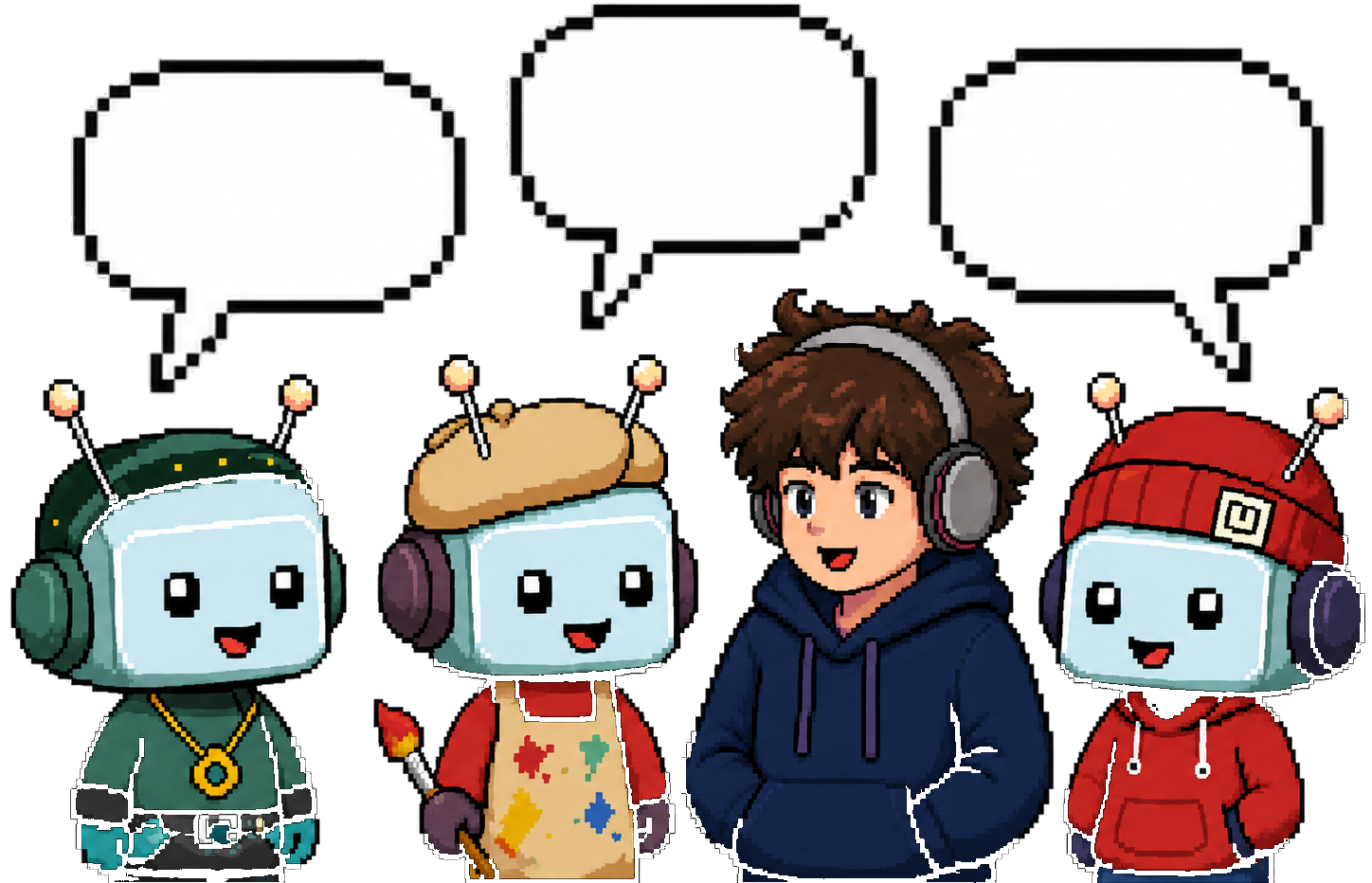
Four specialists: a director who scopes, a coder who writes, an artist who draws, a sound designer who scores. You talk to them. They do the work.
/icon_text_light_svg.svg)
 Chatforce
 Godot
GodotYou tried Godot. You bounced off the editor, the node graph, the GDScript tutorials. Chatforce is the other path: an AI game studio for 2D browser games. No editor surface. No scripting language. No install. You describe the game in plain language; a four-agent team writes the code, draws the art, scores the music, and ships a browser-playable build. The power without the editor.
Scene-and-node mental models are powerful, but they’re also the part most people quit at. Chatforce’s editor is a chat box.
Custom scripting languages have shallow communities and steep tutorials. Chatforce has no scripting language. The Coder agent writes the code.
Importing sprites, configuring atlases, wiring AnimationPlayer. That’s a second skill. Chatforce’s Artist agent generates and wires assets in one step.
Audio buses, sound effect formats, music looping. Another skill. Chatforce’s Sound Engineer composes the soundtrack and produces SFX inline.
HTML5 export quirks, WebGL templates, deployment. Chatforce outputs a browser-playable URL by default; deployment isn’t a step.
Open the editor, find the node, change the value, hit play, watch the build. Chatforce iteration is: type the change, the team applies it, the URL refreshes.
One sentence describes the game. The Studio Director writes a structured brief and picks an engine template, the same kind of decision you would have made in a New Project dialog.
Coder writes the loop. Artist drafts the concept screenshot. Sound Engineer queues up the soundtrack. There is no scene file to author; the runtime is being built for you.
In minutes, a URL. A real game loop, menu, mechanics, win/lose, not a tech demo. No HTML5 export step; the runtime is web-native.
Where you’d open the scene tree and tweak an export var, you type: “Make the jumps higher.” The team applies it. The URL refreshes.
Four specialists: a director who scopes, a coder who writes, an artist who draws, a sound designer who scores. You talk to them. They do the work.
The code the Coder agent writes is real, readable, and editable. If you ever want to crack the hood, you can.
The Artist starts with a full-scene concept screenshot. Every sprite afterwards matches it. No mismatched aesthetic across levels.
The Sound Engineer composes an original looping soundtrack and game-ready SFX tuned to your game’s mood and pacing. No royalty-free hunting; nothing to license.
The output is a URL. The deployment is just clicking ship. No build step, no export template, no WebGL quirks.
The engine you don’t see is the trade. If you specifically want manual engine control with open-source extensibility, a traditional engine is the right pick. Chatforce is better for going from idea to playable 2D browser game fast.
| Feature | Chatforce | Godot | Unity | GameMaker |
|---|---|---|---|---|
| Editor required | No, chat is the surface | Yes | Yes | Yes |
| Scripting language | None, the agent writes the code | GDScript / C# | C# | GML |
| Install required | No | Yes | Yes, large client | Yes |
| Built-in art generation | Yes, consistency-locked | No | No | No |
| Built-in music + SFX | Yes | No | No | No |
| Output to browser | Yes, native URL | HTML5 export | WebGL build | HTML5 export |
| Per-character consistency groups | Yes | None, you source assets | None, you source assets | None, you source assets |
| Transparent backgrounds automatic | Yes, clean transparent sprites | You handle the alpha channel | You handle the alpha channel | You handle the alpha channel |
| Manual engine control + open source | No | Yes, open-source extensibility | No, closed source | No, closed source |
| Time to first playable build | Minutes | Hours-days | Days | Hours |
| Starting price | Free + bonus credits, $20/mo | Free & open-source | Free for personal use | Free tier + paid |
| Best for | Shipping a 2D browser game without learning an editor | Open-source 2D + 3D, native export | Larger teams, full 3D, console export | Experienced 2D devs |
Godot is a powerful open-source engine, but the learning curve is real: a scene-and-node mental model, GDScript or C#, an editor with dozens of panels. People who bounce off it are usually not looking for a different editor. They want to skip the editor entirely. Chatforce is for that group: describe the game in plain language and ship a 2D browser-playable build with no editor surface.
No. Chatforce is a multi-agent AI game studio with its own browser-native runtime. There is no editor surface, no scripting language, no scene file format. You don’t see what the runtime is because the agents drive it for you.
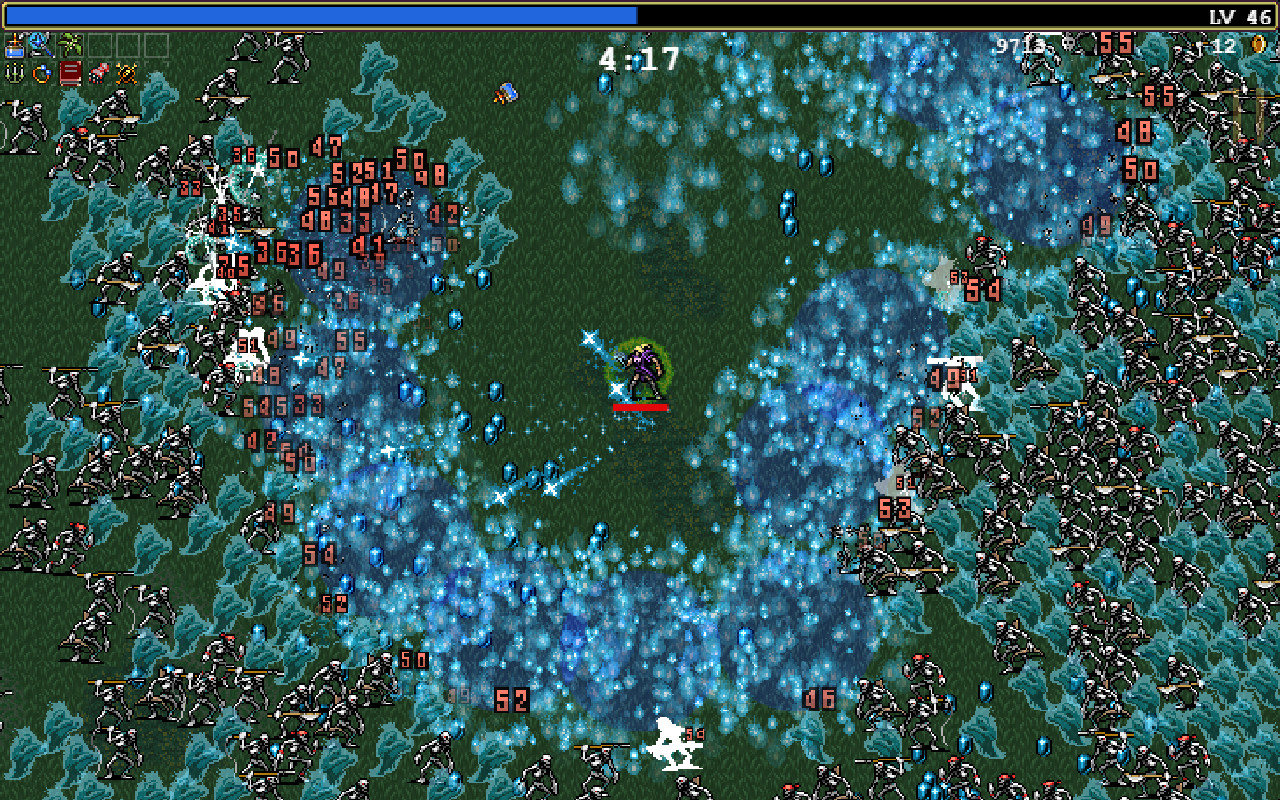
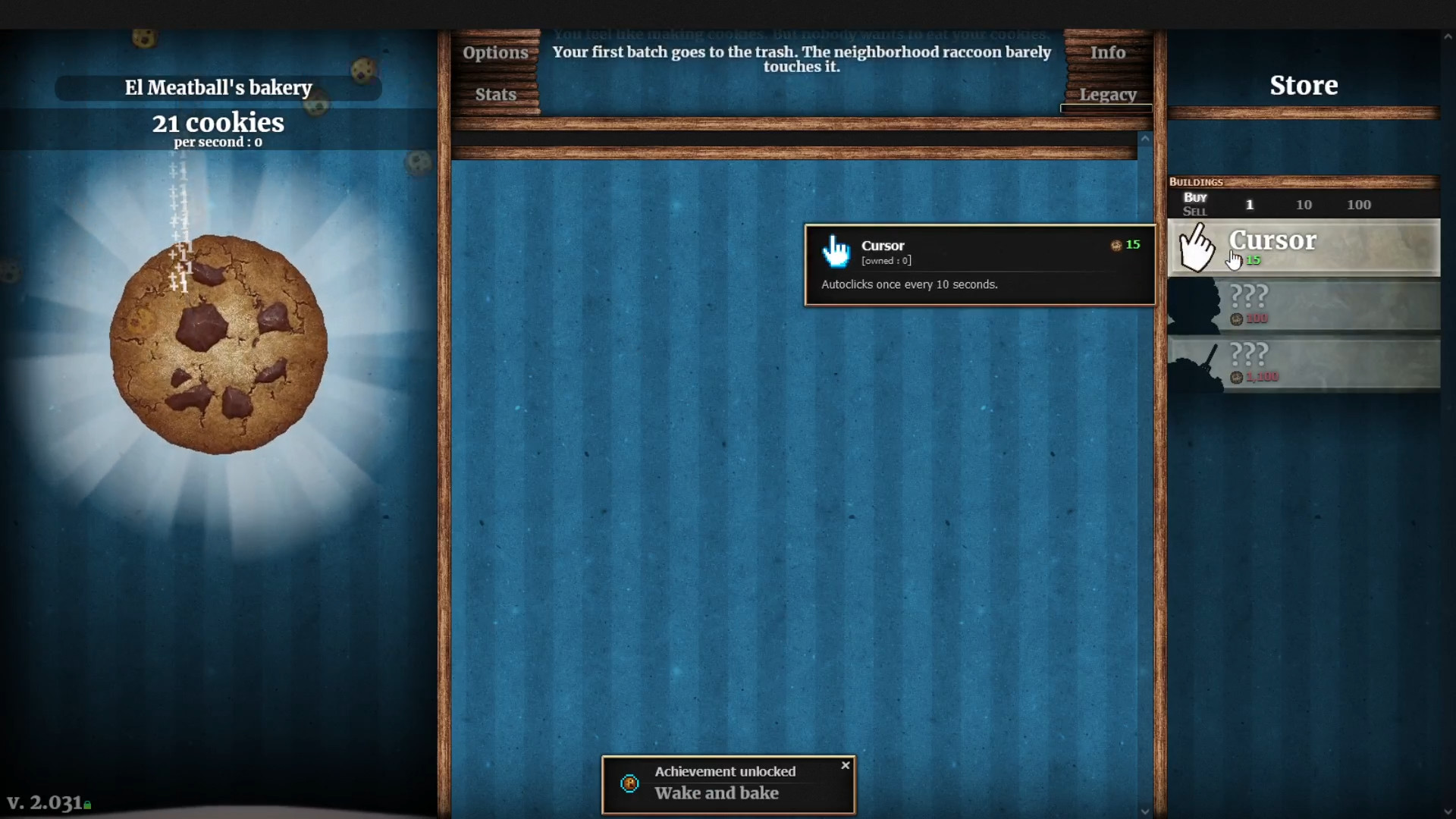
2D browser games: platformers, top-down adventures, idle clickers, tower defense, horde survivors, visual novels. If your prior project was a 2D game, Chatforce covers it. If your prior project was 3D, multiplayer, or voice-acted, Chatforce does not.
You can read and edit the code Chatforce’s Coder agent writes. You give up the scene-and-node editing model. For most 2D browser games, that’s a fair trade, the time you would have spent in an editor goes into describing the game in chat.
No. There is no GDScript, no C#, no Lua. The Coder agent writes the code; you describe behavior in plain English: “double jump that resets on wall touch.” If you want to read it, you can.
Yes. Every Chatforce build is hosted at a shareable link. Send it to a friend; they play in the browser, no install. Embeds and itch.io work too.
Not as a direct import. You can describe the project to the Studio Director and the team will rebuild it. Art and music assets can be uploaded as references. The Artist agent will match the style and the Sound Engineer will arrange around your tracks.
Yes. New accounts get bonus credits, enough to ship at least one fully playable game. The paid plan is $20/month for ongoing usage.
The team takes a sentence and ships a URL. No node graph. No scripting. Just the game.
Build a Game for Free